
Ports of Spain showcase their advantages for project cargo at Breakbulk Europe
• The Spanish port system is promoting specialization in the handling, assembly and transportation of components for wind energy projects
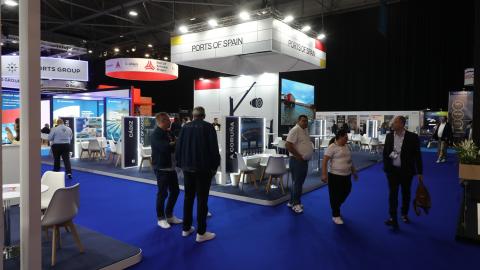
16-06-2026 (Puertos del Estado). Puertos del Estado and 19 Port Authorities are participating under the Ports of Spain stand at Breakbulk Europe Rotterdam, Europe's leading exhibition for project and breakbulk cargo, where they will present their competitive advantages for handling this type of special cargo from 16 to 18 June.
The participating Port Authorities (A Coruña, Avilés, Algeciras Bay, Cádiz Bay, Cartagena, Castellón, Gijón, Huelva, Las Palmas, Motril, Santander, Santa Cruz de Tenerife, Seville, Tarragona, Valencia, Vigo, Almería, Barcelona and Ceuta) will showcase their strengths as specialised hubs and strategic gateways connected to the Trans-European Transport Network (TEN-T).
Under the slogan “Together Forward. Special Ports for Special Loads”, Spanish ports will hold business meetings with shipping lines and logistics operators at the Ports of Spain stand, a 216 m² exhibition space where they will demonstrate their ability to handle and transport all types of cargo worldwide.
Spanish ports are increasingly specialising in the storage, assembly and transportation of components for wind energy projects. Thanks to the versatility of their facilities, they have become a preferred option at a time of growing maritime traffic in renewable energy-related cargoes, such as wind turbine components.
The Port EOL-Mar call for proposals is currently underway. This public funding programme, managed by IDAE (Institute for Energy Diversification and Saving) under Spain's Recovery Plan, aims to support the adaptation of port infrastructure—including quays, storage areas, access routes and draughts—to facilitate the deployment of offshore renewable energy projects, particularly offshore wind power.
Breakbulk Europe brings together more than 11,400 professionals from 120 countries and around 700 exhibitors, fostering the exchange of ideas, innovation and partnership opportunities.
Project cargo refers to cargo that, due to its exceptional size or weight, cannot be transported in standard containers and therefore requires specialised infrastructure and handling.
The Spanish port system is a vital part of the European supply chain and is at the forefront of adapting its quays, operational areas, general services and specialised port infrastructure. It offers more than 395 kilometres of quays, including 65 km dedicated to bulk cargo, 47 km of multipurpose berths, and 18 km for ro-ro traffic.
In 2025, cargo throughput at Spanish ports exceeded 556 million tonnes, including 88 million tonnes of conventional general cargo and 262.3 million tonnes of liquid and dry bulk cargo. More than 40% of total port traffic is linked to European import and export markets.